An offline-first smart-home hub that runs a local large-language model on hardware you own — full natural-language control of your home with no cloud, no telemetry, and nothing about your household leaving the building.
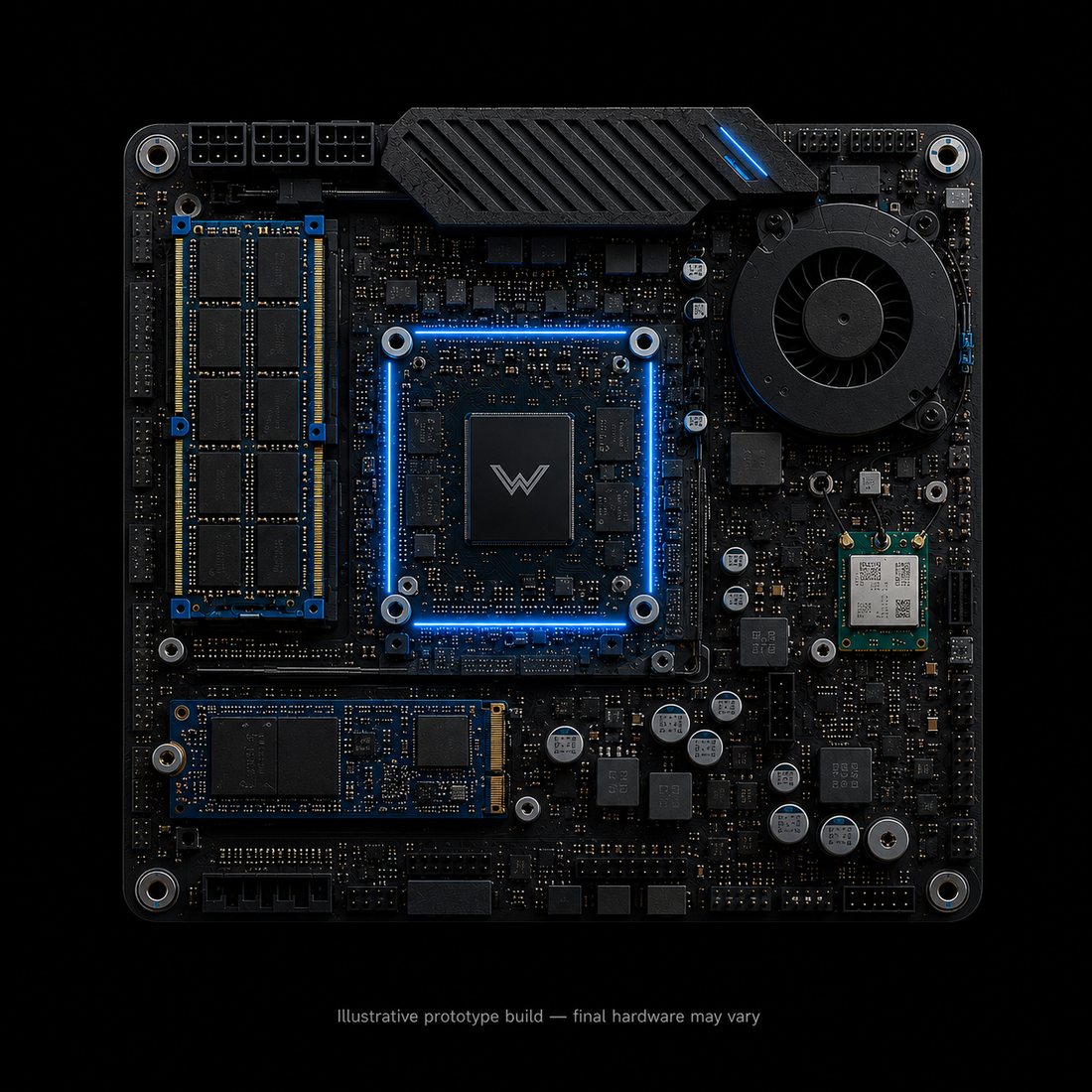
Warden is an offline-first smart-home hub — a single device that runs a large-language model on hardware you own, and gives you full natural-language control of your home with no cloud dependency, no telemetry, and nothing about your household leaving the building.
It is built on two mature, open technologies: Home Assistant for device orchestration and a locally hosted model served through Ollama for understanding and reasoning. The model, the automations, and the data all live on the hub itself. The design goal is uncompromising — a home that is genuinely intelligent without being a listening post.
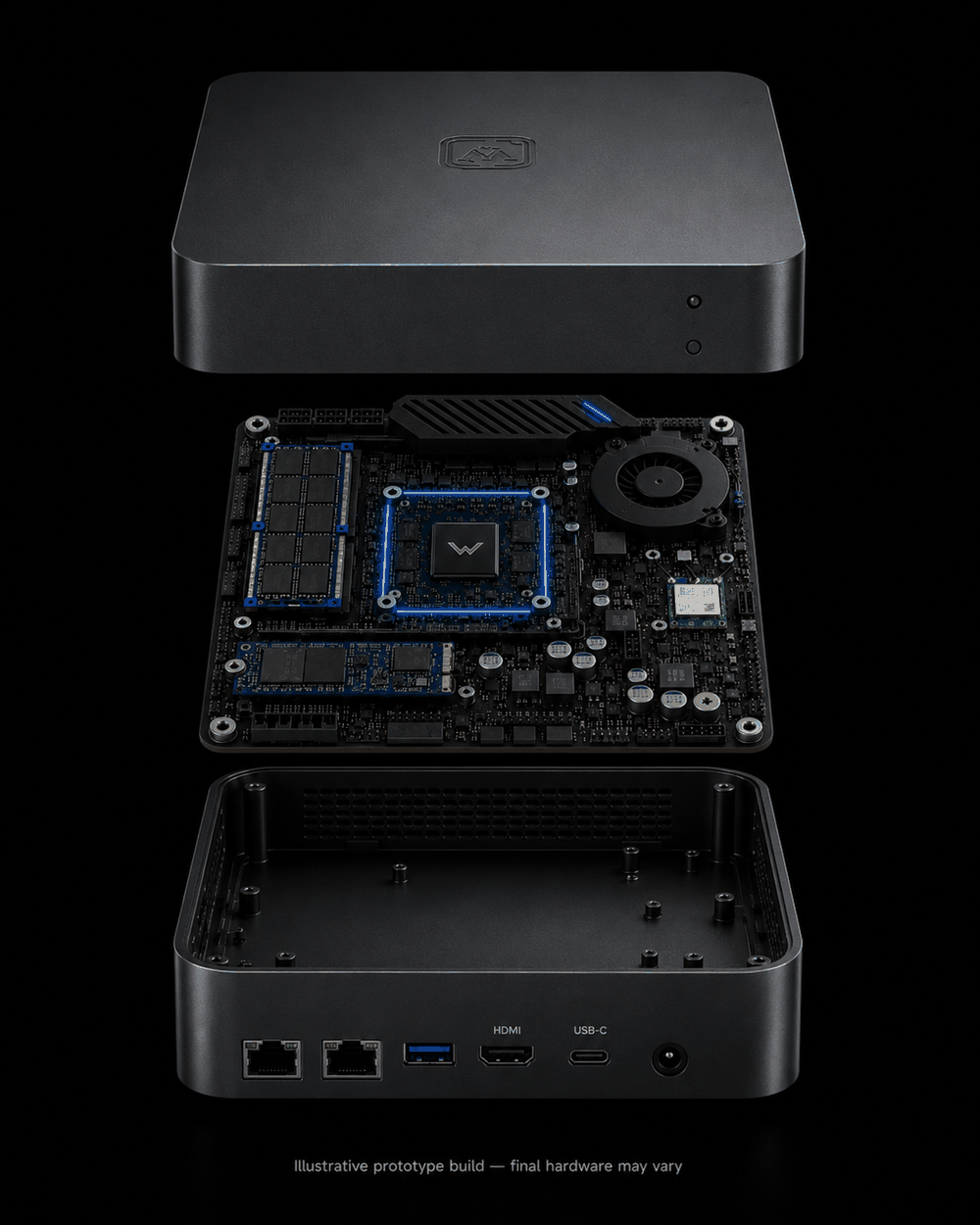
The mainstream smart-home and voice platforms are built on a cloud model, and the industry is moving away from local control, not toward it. In March 2025, Amazon removed the one setting that let certain Echo owners keep voice processing on the device, so that essentially every Alexa request is now sent to Amazon's cloud. Amazon has also acknowledged that it collects information about other devices on a customer's home network — even ones Alexa never touches.
“We use your data to improve the AI” has become the standard justification. In practice, your words become permanent training material and behavioral-profile data. Meta now trains its AI on the public posts and comments of adult users across Facebook and Instagram — and by its own account, people's interactions with Meta AI, meaning their questions and queries, are used to train and improve its models too. OpenAI's own documentation states that, on consumer plans, ChatGPT is trained on users' conversations by default unless they hunt down the opt-out.
And the “we would never misuse it” assurances have a track record. In 2019 the Federal Trade Commission hit Facebook with a $5 billion penalty — the largest privacy fine it had ever imposed — after the Cambridge Analytica scandal exposed how tens of millions of users' personal data had been funneled to a third party. The principle Warden is built on follows directly: the only data that can't be leaked, sold, subpoenaed, or quietly repurposed is the data that never leaves your house.
This isn't a niche worry — it's a mainstream platform exposed to mainstream surveillance. The U.S. smart-home base is large and compounding, which means the privacy gap Warden closes is widening every year.
Warden is local-first from the ground up — not a cloud product with a local mode bolted on:
Every block below sits inside the home. Inputs feed a single hub that holds the model, the automations, and the data; outputs are answered locally or relayed to a caretaker through a tunnel you control. The one path that doesn't exist is the route out to a vendor's servers.
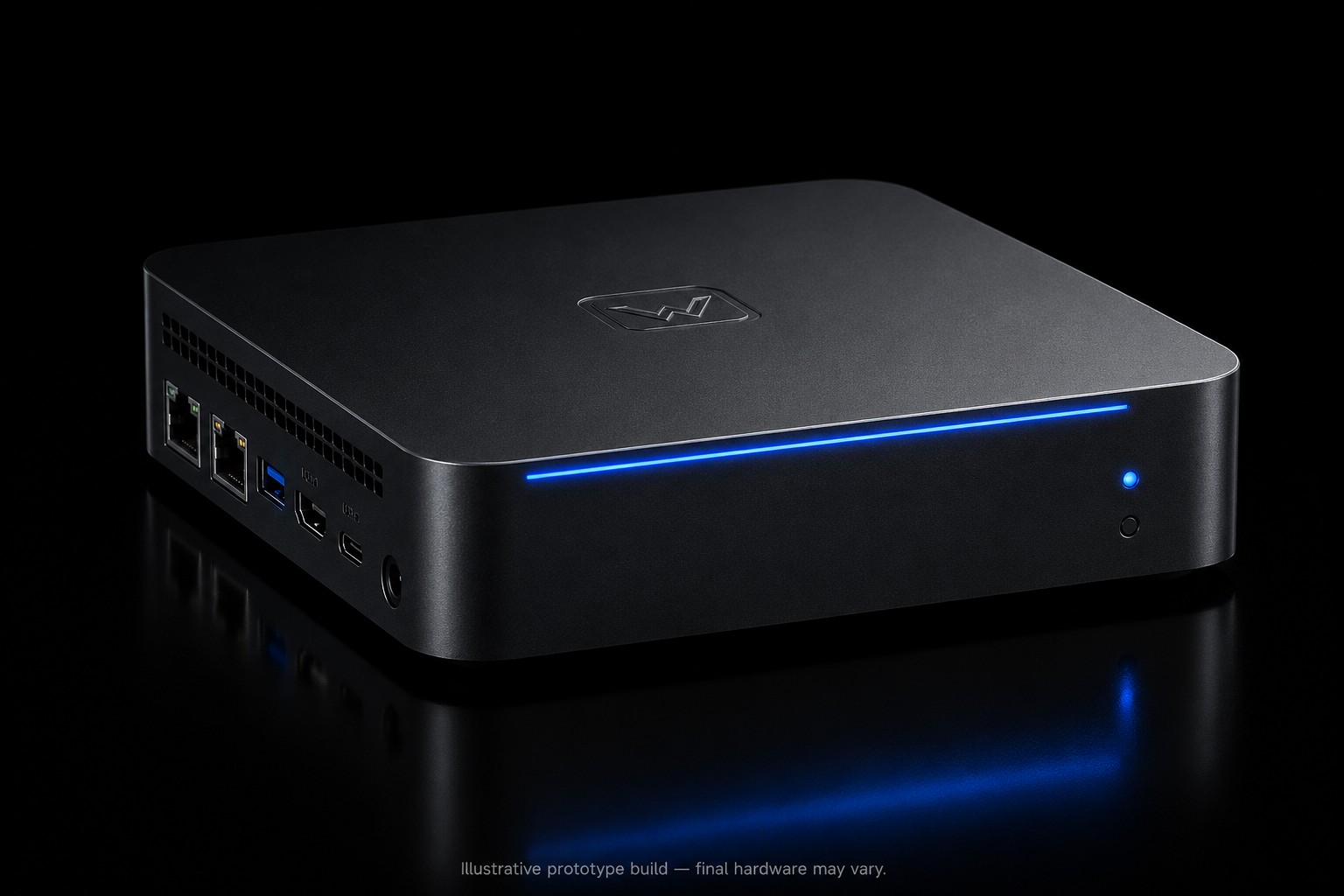
A proposed reference build. Warden is hardware-agnostic, but these are the components that make a capable, fully local hub — sized so a quantized model and Home Assistant run comfortably side by side.
Software stack — open-source and self-hosted end to end:
An on-device wake word and a locally hosted LLM handle natural-language commands and conversations. No audio, no transcript, and no prompt ever leaves the hub.
Presence, motion, door/contact, and environmental sensors instead of video feeds — situational awareness without putting a lens inside someone's home.
Plain-language daily check-ins and anomaly alerts ("routine looks normal today," or a heads-up when it doesn't) delivered to a trusted caretaker.
Lighting, climate, locks, and energy routines that keep running when the internet — or the vendor — is gone. Offline is the design target, not a degraded fallback.
Household data lives on the device, encrypted at rest. You can see exactly what exists, export it, and wipe it. There is no copy on someone else's server.
Optional self-hosted encrypted tunnel for checking in from afar — your relay, your keys, no third party sitting in the middle of your home.
UPS / battery-aware and built to keep core safety and comfort functions alive through power and connectivity outages.
Matter, Zigbee, Z-Wave, and Thread support — so the system isn't tied to one manufacturer's cloud or bricked when a product line is sunset.
People who refuse the premise that a smart home has to be a listening post — and who want their prompts, routines, and daily life kept strictly confidential.
Dignified, camera-free monitoring that reassures family a parent is moving through their day normally, without turning their home into a recorded space.
Keep a child's routines, footage-free presence data, and the home's "memory" local — not sitting on a corporate server tied to an advertising business.
Cabins, farms, rural and remote properties where cloud assistants simply stop working when the connection drops. Warden also acts as a backup automation brain during power or internet loss.
Lawyers, clinicians, therapists, and accountants who can't feed privileged or regulated client information into a cloud AI — but still want a capable assistant.
Handle customer data, trade secrets, and IP with an assistant engineered so none of it is ever shipped to a vendor for "improvement."
Executives, public figures, journalists, and security-conscious users for whom an always-on cloud microphone is an unacceptable attack surface.
Voice control for users with mobility or vision needs that has to keep working even when the internet doesn't — reliability as an accessibility requirement.
The privacy case for Warden isn't hypothetical. It's drawn from the public record of how the dominant platforms actually treat household data:
 JODRICK MARQUINEZ